
The Great Wildebeest Migration is one of the most extraordinary wildlife spectacles on Earth a continuous, year round journey of over two million wildebeest, accompanied by zebras and gazelles, moving across the vast ecosystems of the Serengeti and Maasai Mara. It is not just a migration; it is a powerful story of survival, instinct, and the unbreakable rhythm of nature.
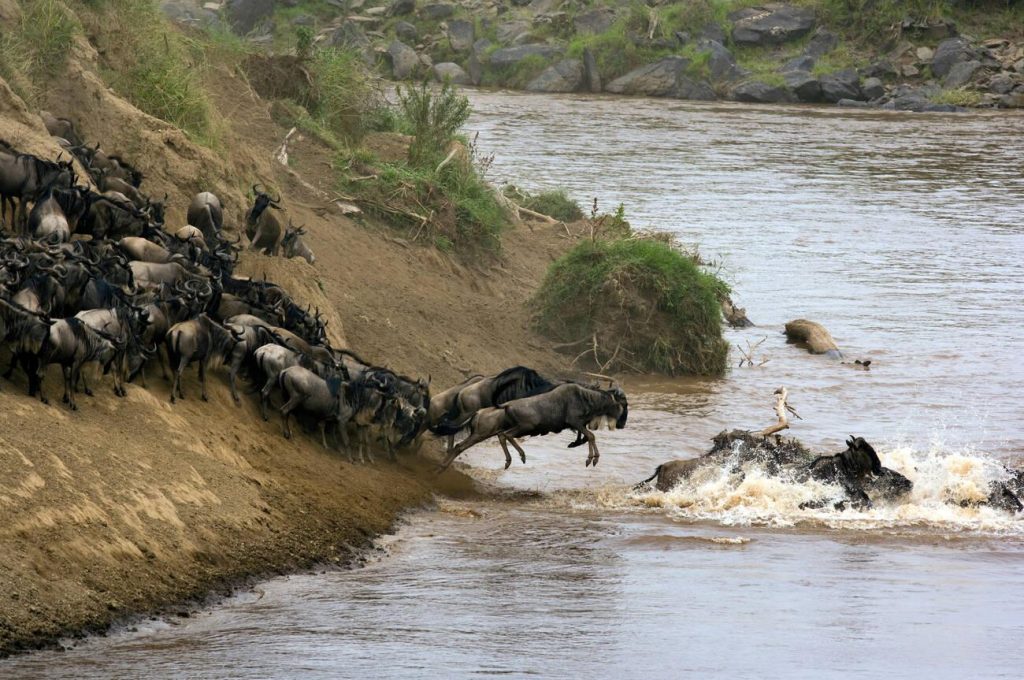
This epic journey is driven by the search for fresh grazing and water, guided by ancient instincts that have remained unchanged for centuries. The herds move in a circular path through Tanzania’s Serengeti and into Kenya’s Maasai Mara, following the rains and transforming the landscape into a living, moving river of wildlife.
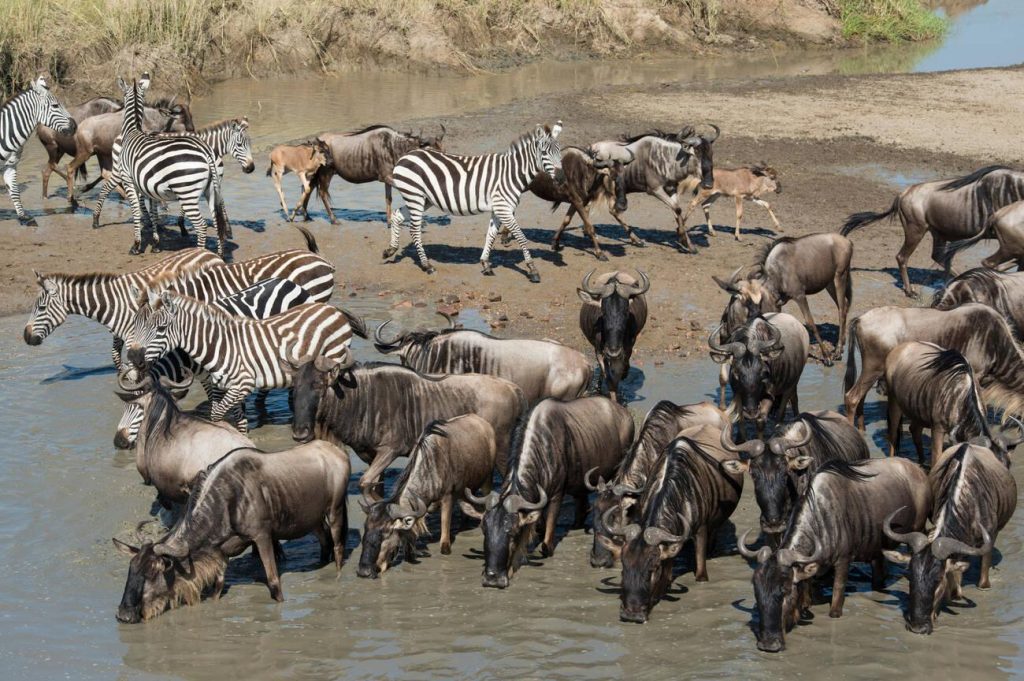
Witness a breathtaking natural phenomenon where millions of animals move together in a perfectly timed rhythm, creating one of the largest wildlife spectacles on Earth. The plains come alive with endless herds of wildebeest, zebras, and gazelles .
Experience the thrill of seeing wildlife in their natural habitat through guided game drives led by knowledgeable and friendly experts. Our guides not only help you spot animals but also share fascinating stories and insights that make each encounter more meaningful.
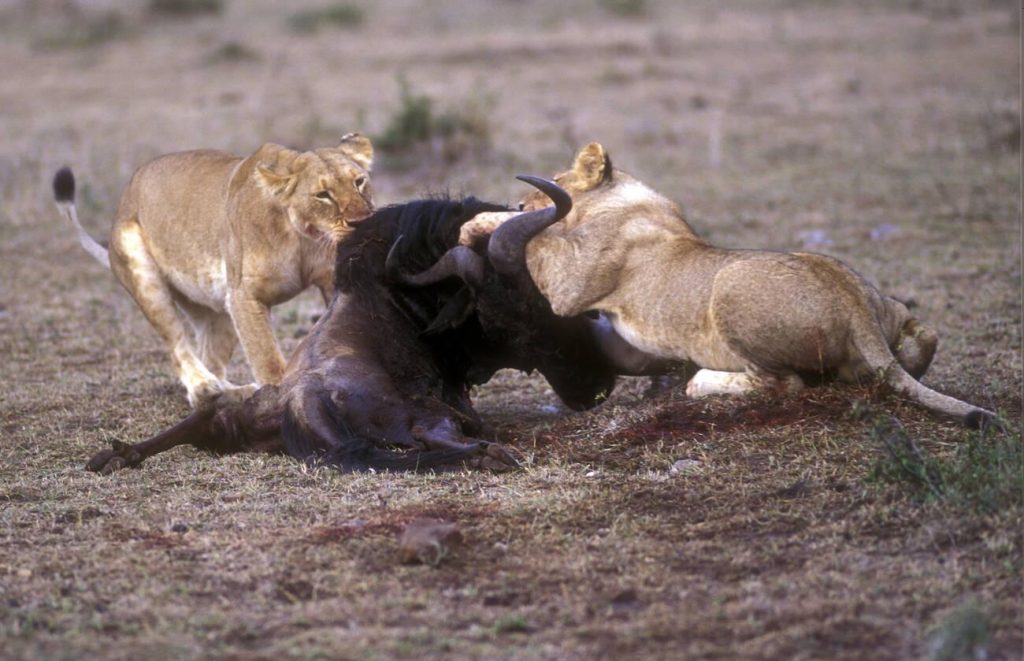
Predator action is one of the most thrilling and unforgettable aspects of the Great Wildebeest Migration. With millions of animals moving across the plains, predators are never far behind. Lions, cheetahs, leopards, and hyenas take advantage of this abundance, creating intense moments
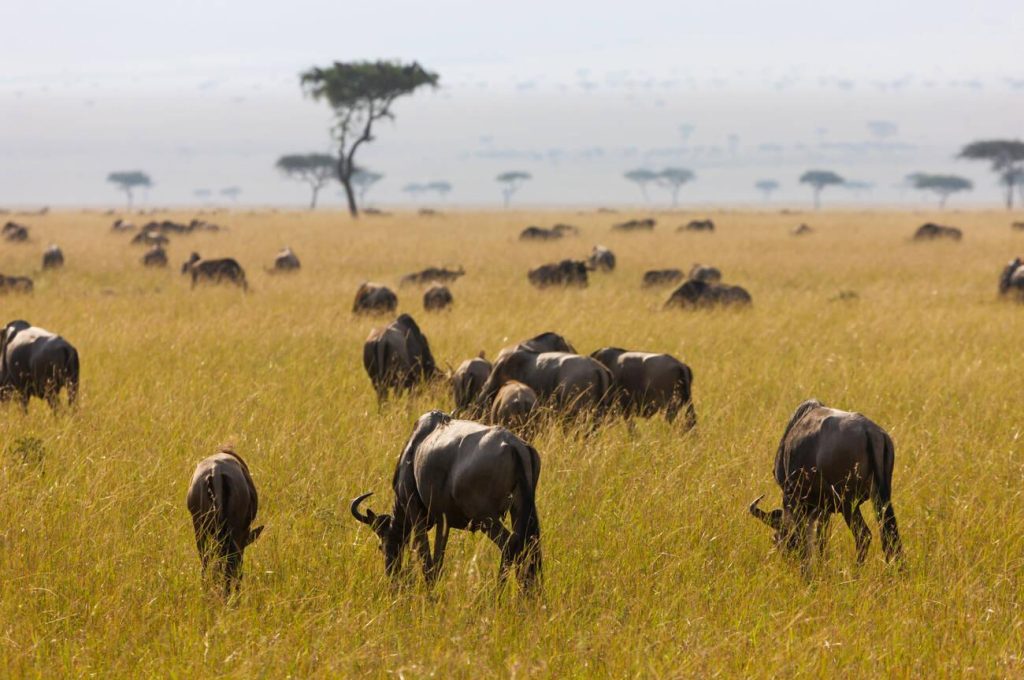
The Great Wildebeest Migration unfolds across an ever-changing landscape, where no two moments ever look the same. The journey is shaped by the rhythm of the seasons transforming the Serengeti
Step into the heart of the Great Wildebeest Migration with game drives that bring you closer to the action than ever before. Led by expert safari guides, these journeys are carefully planned around real-time wildlife movements, ensuring you are always in the right place at the right moment.
With deep knowledge of the terrain and animal behavior, your guide tracks the movement of the herds across the vast plains, following fresh signs such as hoof prints, grazing patterns, and predator activity. This skill transforms every drive into a thrilling search for nature’s most spectacular moments.
Front-row views mean more than just seeing wildlife it means experiencing it at eye level. Whether it’s a massive herd of wildebeest thundering past your vehicle, elephants calmly crossing just meters away, or predators quietly stalking in the distance, you become part of the unfolding story.
Hot air balloon safaris offer one of the most breathtaking ways to experience the Great Wildebeest Migration and the wider African wilderness. As the first light of dawn spreads across the horizon, you gently rise above the savannah, drifting silently over endless plains filled with wildlife below.
From this unique perspective, the scale of nature becomes truly unforgettable. Vast herds of wildebeest and zebras appear like moving rivers across the land, while elephants, giraffes, and antelope move gracefully through the morning mist. The silence of the balloon, broken only by the occasional burst of the burner, creates a peaceful and almost dreamlike atmosphere.
Luxury & mobile camps bring comfort, style, and exclusivity right into the heart of the Great Wildebeest Migration. Designed to move with the herds, these camps are carefully relocated across the Serengeti ecosystem, ensuring guests are always close to the action while enjoying a private and intimate safari experience.
Inside the tents, you’ll find elegant furnishings, comfortable beds, suite bathrooms, and thoughtful details that create a perfect balance between wilderness and luxury. Large canvas openings allow you to fall asleep to the sounds of the bush and wake up to views of grazing wildlife just outside your doorstep.
Evenings in mobile camps are especially magical. Guests gather around glowing campfires under star-filled skies, sharing stories of the day’s sightings while enjoying freshly prepared gourmet meals. The atmosphere is peaceful, romantic, and deeply connected to nature.
The Great Wildebeest Migration offers some of the most powerful photography opportunities on Earth, where every moment feels like a frame from a wildlife documentary. From sweeping landscapes filled with endless herds to intimate close-ups of predators in action, the scenes are constantly changing and full of drama.
Golden hour is especially magical for photographers. The soft light of sunrise and sunset transforms the savannah into a glowing canvas, casting long shadows and warm tones across the plains. This is the perfect time to capture silhouettes of elephants, giraffes, and wildebeest moving gracefully through the horizon.
Calving season in the southern Serengeti (January–March) is one of the most magical and emotionally powerful periods of the Great Wildebeest Migration. During this short window, hundreds of thousands of wildebeest calves are born almost daily, transforming the plains into a vibrant nursery of new life.
The landscape is lush and green after the rains, providing rich grazing grounds that support both mothers and newborns. Within minutes of birth, calves are already standing and taking their first steps an incredible display of instinct and survival in the wild. The air feels alive with movement, energy, and constant activity.
However, this season is also a time of intense predator activity. Lions, cheetahs, hyenas, and jackals closely follow the herds, taking advantage of the abundance of vulnerable young. This creates dramatic moments of tension, where life and survival unfold in real time across the open plains.
The Great Wildebeest Migration is not only about movement and survival it is also a living network of animal relationships that shape the entire ecosystem. Different species interact constantly, forming alliances, dependencies, and behaviors that ensure life continues across the plains.
One of the most common relationships is between wildebeest and zebras. These two species often migrate together because they feed on different types of grass, allowing them to graze efficiently in the same areas. Zebras eat the taller grass first, making it easier for wildebeest to feed on the shorter shoots that remain. This natural partnership increases their chances of survival during the long journey.
Birds such as oxpeckers also play an important role in the ecosystem. They perch on large animals like buffalo and giraffes, feeding on ticks and insects while providing a natural form of pest control. This mutual benefit is a perfect example of how different species support each other in the wild.
The Great Wildebeest Migration is one of the clearest living examples of the Circle of Life a continuous cycle of birth, survival, death, and renewal that shapes the entire African savannah. Every movement of the herds contributes to this balance, where life is constantly being created and sustained through nature’s natural order.
It begins with new life during the calving season, when thousands of wildebeest are born on the open plains. These fragile newborns take their first steps in a world filled with both opportunity and danger. Their survival depends on instinct, speed, and the protection of the herd, symbolizing the beginning of the cycle.
Predators play a crucial role in maintaining balance within this system. Lions, cheetahs, and hyenas rely on the migration for food, ensuring that only the strongest animals survive. While these moments may seem intense, they are essential for keeping the ecosystem healthy and preventing overpopulation.
The skies and trees are alive with birds of every kind. Vibrant species like the lilac breasted roller flash brilliant colors as they dart through the air, while vultures circle high above, playing their vital role in the natural cycle. Along rivers and wetlands, kingfishers, herons, and storks create a peaceful contrast to the drama unfolding on the plains.
On the ground, smaller mammals and insects quietly shape the ecosystem. Meerkats and mongooses move in organized groups, always alert to danger, while warthogs and hares dart through the grass with surprising speed. Even tiny creatures like ants and termites contribute significantly by aerating soil and recycling nutrients, keeping the land fertile for grazing herds.
Ostriches, the world’s largest birds, stride confidently across the open plains, sharing space with wildebeest and zebras. Their presence adds to the diversity and energy of the landscape, reminding visitors that the safari experience is not only about the Big Five, but about all life forms working together.
For travelers, witnessing the migration offers an unforgettable safari experience, with opportunities to see predators like lions and cheetahs in action, making it one of the most iconic wildlife events in the world.